
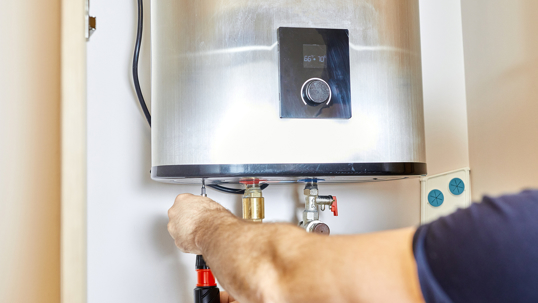
Your water heater is getting older, and everyone you talk to keeps saying the same thing: go tankless for endless hot water and lower bills. It sounds great in theory, especially if you have a busy Portland household and a tank that struggles to keep up. The real question is not whether tankless units work, but whether your specific home is actually ready to support one without a lot of expensive surprises.
In Portland, most homes were not built with tankless systems in mind. Gas lines, vent routes, electrical panels, and plumbing layouts were designed around traditional tanks. Some houses are almost plug and play for a Portland tankless upgrade, while others need thoughtful changes first. If you understand which category your home falls into, you can make a smarter decision about when and how to upgrade.
Wolcott has been working on water heaters, gas piping, venting, and electrical systems in Portland and nearby communities since 1978. Over those decades, we have seen tankless projects that went smoothly and others that turned into major infrastructure upgrades because no one checked readiness ahead of time. In this guide, we share what we look at in a home so you can get a realistic picture of your own Portland tankless upgrade readiness before you commit.
What “Tankless Ready” Really Means For A Portland Home
Most people think of a tankless water heater as a smaller version of a traditional tank, but it works very differently. Instead of storing hot water, it heats water on demand as it flows through the unit, which means a home has to support the right gas, venting, electrical, and plumbing conditions for the system to perform well. In Portland, colder incoming water and higher winter demand make those requirements even more important.
A Portland home is “tankless ready” when its infrastructure and hot water demand line up with the needs of the system:
- Adequate gas supply: The gas line and meter must support the higher BTU input required by many tankless units.
- Proper venting path: The home needs a safe, code-compliant route for exhaust to exit outdoors.
- Reliable electrical support: Controls, ignition, and electric models all depend on the right electrical setup.
- Suitable installation location: Wall-mounted placement should allow for service access and practical plumbing connections.
- Realistic hot water demand: Household usage must match the unit’s gallons-per-minute capacity.
- Cold incoming water conditions: Portland’s cooler winter water increases temperature rise, which affects performance and sizing.
- Room for upgrade work: If the existing infrastructure is not ready, additional gas, venting, or electrical changes may be needed before installation.
Step 1: Match Tankless Capacity To Your Portland Household’s Hot Water Demand
The first question is simple. How much hot water do you really need at the same time? A tank gives you some buffer because it holds hot water in reserve. A tankless unit has no storage, so it has to keep up with your peak demand in real time. If your household often runs a shower, a second shower upstairs, and the dishwasher at once, that peak load is very different from a one bathroom condo with a single occupant.
Think through a typical busy moment in your home. Maybe it is a weekday morning, when someone showers while another person starts a load of laundry and the kitchen sink is running. Each of those fixtures has an approximate flow rate. A shower can use around 2 gallons per minute, a dishwasher and washing machine each use their own share of hot water, and the total adds up quickly. A properly sized tankless system has to be able to deliver enough GPM at your target temperature for that combined load.
Portland’s cooler inlet water makes this more important. In winter, the water entering your home might be much colder than in a warmer climate. To get from that cold starting point up to a comfortable shower temperature, the tankless unit needs a larger temperature rise, which usually means it can deliver fewer gallons per minute at that output temperature than it could with warmer incoming water. Many national articles gloss over this, but it is a real factor in Portland tankless upgrade readiness.
In smaller one bathroom homes or apartments, this often works in your favor. A modest whole home tankless unit can usually handle a single shower and a sink at the same time without issue. In a typical Portland bungalow with one or two baths and a couple of heavy hot water users, we often look at slightly larger capacity or careful discussion about how many fixtures will be used at once. In larger, multi bathroom homes, especially with soaking tubs or body spray showers, we may start talking about higher capacity options or even multiple units. These are the kinds of sizing conversations we have on site so that the system we recommend aligns with how you actually live.
Step 2: Can Your Gas Line and Meter Handle A Tankless Upgrade?
Once we understand your demand, the next question is whether your gas supply can support the equipment needed to meet it. This is where many Portland homeowners get an unpleasant surprise. A traditional gas tank water heater usually uses a lower BTU input than a whole home gas tankless unit. To produce enough heat in a short time, many tankless models need a substantially higher input, and that increased demand flows through your existing gas piping and meter.
Gas line sizing is not just about the size of the pipe. It also involves the length of the run and the total load on the system, including your furnace, stove, fireplace, and any other gas appliances. If the piping is too small for the combined demand, or if a long run to a new tankless location adds too much resistance, the unit may not receive enough gas when everything is running. That can mean poor performance, nuisance shutdowns, or unsafe operating conditions if it is not addressed.
In many older Portland homes, we find that the gas line to the existing tank was sized just for that appliance, with little margin for a much higher BTU tankless unit. Bungalows and mid century homes often have smaller diameter gas lines that worked well for a standard tank but need to be upsized or rerouted for tankless. In some cases, the gas meter itself may need to be evaluated by the utility to confirm it can support higher simultaneous demand from all appliances.
This is where having plumbing and HVAC work handled together makes a real difference. Our technicians at Wolcott routinely evaluate gas piping when we look at a Portland tankless upgrade. If the existing lines are not adequate, we can design and install new piping, coordinate with the gas utility where needed, and make sure the entire system is safe and appropriately sized. Talking through these potential changes during the planning stage helps you decide whether a tankless upgrade is worth the added investment in your particular home.
Step 3: Venting Routes, Combustion Air, and Your Home’s Layout
A tankless water heater moves a lot of heat in a compact space, so it needs a safe, efficient way to vent exhaust and draw in combustion air. Many modern gas tankless units use direct venting, which means they pull fresh air from outside and send exhaust gases back out through dedicated pipes. That approach can improve safety and efficiency, but it also means we need a clear path from the unit’s location to the exterior of your Portland home.
In simple layouts, venting is straightforward. For example, if a tankless unit is mounted on an exterior basement wall, we may be able to route intake and exhaust directly through the wall to the outside, staying within general clearance guidelines to windows, doors, and neighboring properties. In more complex layouts, such as an interior closet or a central utility room, vent pipes may need to travel vertically through floors and the roof, or horizontally through framing, which adds complexity and sometimes cost.
Combustion air is the other side of the equation. Older, drafty homes often had enough accidental air leakage that indoor combustion appliances were not starved for air. As Portland homes get tighter through window upgrades and weather sealing, that is less of a given. Direct vent tankless units solve much of this by drawing air from outside instead of relying on indoor air, but that makes correct vent sizing and routing even more important. A tight, recently remodeled home with limited mechanical room space needs a more deliberate venting plan than an unfinished basement with plenty of open air.
Because we work across plumbing and HVAC, we are used to threading venting through many types of Portland construction. From older homes with thick plank sheathing to newer infill houses with modern siding and insulation, we evaluate where a tankless could go, how to route venting with minimal disruption, and how to stay within code requirements that inspectors will look for. Sharing these options and tradeoffs with you before installation helps you choose a location that fits both your home’s layout and your comfort with visible vent terminations.
Step 4: Electrical Panel and Circuit Requirements For Tankless Systems
Many homeowners are surprised to learn that their new gas tankless water heater will still need electricity. Even though the main heat comes from gas, the unit usually relies on power for ignition, control boards, fans, and sometimes a recirculation pump. The electrical demand for a gas tankless unit is typically much lower than for an all electric tankless heater, but we still need a reliable connection and an available circuit that meets the manufacturer’s general requirements.
Fully electric tankless units are a different story. They can require significant amperage to heat water on demand, often far more than an older 100 amp or even 125 amp electrical panel can comfortably provide once you factor in the rest of the home’s load. In some Portland homes, particularly older ones that have not had recent electrical upgrades, the panel is already near its limit with existing appliances, lighting, and outlets. Adding a large electric tankless heater without evaluating the panel can overload the system or require a major service upgrade.
When we assess Portland tankless upgrade readiness, our team looks at the electrical side along with gas and venting. For gas units, we make sure there is a suitable location for a nearby receptacle or hardwired connection and that the circuit can support the controls and fans. For electric tankless options, our electricians check panel size, available breaker spaces, and the home’s overall electrical load to see whether a panel upgrade or new service is necessary.
Because Wolcott provides electrical work as well as plumbing and HVAC, we can evaluate your panel and circuits during the same visit and explain what, if any, changes would be needed. That integrated approach keeps you from getting caught between multiple contractors and helps you compare a gas tankless, an electric tankless, and a high efficiency tank on a level playing field that includes electrical implications, not just equipment brochures.
Step 5: Plumbing Layout, Space, and Location Options In Portland Homes
Even if gas, venting, and electrical capacity check out, the physical layout of your plumbing and available space will shape how well a tankless system works for you. Traditional tanks often live in basements, garages, or utility closets. A wall mounted tankless heater can reclaim some floor space, but it still needs room on the wall, safe clearances to combustibles, and enough space in front for service. Squeezing a unit into a tight closet without access makes future maintenance harder and can create code issues.
Location also affects performance. The farther hot water has to travel from the heater to your fixtures, the longer you wait for hot water and the more water you waste while it warms up. Many Portland homes were originally plumbed around a tank in a central basement spot. If most of your bathrooms are stacked above that area, keeping the water heater there may still make sense. In other cases, moving a tankless unit closer to the most heavily used bathroom or kitchen can noticeably improve response time.
Older Portland homes sometimes have galvanized steel piping or mixed materials from past remodels. Those materials can narrow over time and reduce flow, which is more noticeable with a tankless system that expects a certain minimum flow to activate. In multi story houses, long vertical runs and branch lines can also introduce delays. In these cases, adding or planning for a recirculation loop may be worth discussing so that hot water reaches fixtures faster, though that has its own installation and operating considerations.
When we visit a home to evaluate Portland tankless upgrade readiness, we look at where the current tank is, how the plumbing branches from that point, and what walls or spaces might accommodate a tankless unit. We also consider aesthetics and noise. For example, locating a tankless on a shared wall with a bedroom might not be ideal if it could be installed just as easily on a quieter exterior wall. Because we treat each property as if it were our own, we take time to talk through these choices so you understand how the location will feel in everyday use, not just on a layout drawing.
Permits, Inspections, and Portland Specific Considerations
Any time you change gas piping, install venting through a wall or roof, or modify electrical circuits, permitting and inspections usually come into play. In Portland, that often means pulling permits for plumbing, mechanical, or electrical work, depending on the scope of your tankless upgrade. Inspectors then verify that the work meets current codes for safety and performance. This is not a hurdle to avoid. It is part of making sure your new system is installed correctly and safely.
Portland’s housing stock adds its own layer of nuance. Many homes are older, with original framing and materials that need careful handling when cutting openings for venting or running new lines. Some areas have specific considerations for exterior penetrations, clearances near property lines, or seismic bracing requirements for related work. Weather exposure also matters if you are considering an outdoor rated tankless unit or a location that leaves piping or venting more exposed to the elements.
Wolcott has been working within Portland’s permitting and inspection processes since the late 1970s. When we plan a tankless upgrade, we outline which permits will be needed, how inspections will be scheduled, and what kind of access inspectors typically require in a home. We keep you informed from the first conversation through the final sign off so you are not guessing about the next step. That transparency makes a complex project feel more manageable and helps avoid delays.
Is A Portland Tankless Upgrade Right For Your Home Right Now?
By this point, you can see that Portland tankless upgrade readiness is about more than choosing a brand and hanging a box. It starts with your family’s hot water demand, then moves through your gas supply, venting options, electrical panel, plumbing layout, and the local permitting landscape. In some homes, those pieces line up neatly and a tankless upgrade is a clear win. In others, you may be looking at additional work that changes the cost, timing, or practicality of going tankless right away.
For example, a smaller Portland bungalow with one or two bathrooms and reasonably modern gas and electrical systems may be an excellent candidate for a single gas tankless unit. The needed upgrades might be modest, and the benefits in space savings and continuous hot water could feel immediate. A larger, older home with undersized gas lines, a full electrical panel, and long plumbing runs to multiple bathrooms might be better served by planning upgrades in stages or considering a high efficiency tank until the infrastructure is improved.
Our role at Wolcott is to help you see those tradeoffs clearly, not to push you toward one solution. During an in home evaluation, our plumbing, HVAC, and electrical experience come together. We check gas line sizing, meter capacity, and vent paths. We look at your panel and circuits. We map out your plumbing layout and talk about where you want the heater to live. Then we present straightforward options, which may include a tankless upgrade, a high efficiency tank replacement, or a phased plan, along with upfront pricing so you know what each path involves.
Because we are family owned, community rooted, and have served generations of Portland homeowners, we think in terms of long term comfort and reliability, not just short term installs. If a tankless upgrade is right for your home now, we can also discuss scheduling and flexible financing options to help you move forward on a timeline and budget that work for you. If it makes more sense to wait or take a different direction, we will say so and explain why, so you can make the decision that truly fits your house and your family.
Talk With Wolcott About Your Portland Tankless Upgrade Readiness
Understanding how tankless systems work, what they demand from your gas, venting, electrical, and plumbing, and how Portland’s homes and codes shape installation puts you ahead of most homeowners who only hear the sales pitch. That knowledge helps you avoid surprise costs, underperforming equipment, and frustrating last minute changes once work has already begun. The next step is to apply that framework to your specific house.
If you are considering a Portland tankless upgrade, we can walk through your home, check the key readiness points we have covered here, and lay out clear options that match your goals. You will know where your home stands today, what would be involved in going tankless, and how alternatives compare, with upfront pricing and straightforward communication at every stage. To schedule a tankless readiness evaluation with Wolcott, call us today.