
The first time a basement drain in an older Portland home backs up, it often feels like bad luck. When it happens again a few months later, especially in a neighborhood lined with big maples or firs, there is almost always a deeper problem hiding in the ground. What you are seeing inside is often the end result of a long, slow battle between tree roots and aging drain pipes.
For many homeowners, this shows up as slow drains throughout the house, toilets that burp or gurgle, or a floor drain that suddenly sends water back into the basement. You might have had someone out to run a cable, only to have the problem return. At that point, questions start: Are tree roots really in the line, is the city responsible, and will fixing it mean tearing up your entire yard or losing a mature tree?
We have been working on plumbing systems in Portland and nearby communities since 1978, and tree roots invading older drain and sewer lines are something we see regularly. After nearly 50 years in these neighborhoods, patterns are very clear. In this guide, we explain how roots actually get into pipes, why older homes are at higher risk, how we confirm what is happening with your line, and what realistic repair and prevention options you have.
Why Tree Roots Target Older Drains
Tree roots do not go looking for pipes because they like plastic or concrete. They chase moisture, oxygen, and nutrients in the soil. When a buried drain or sewer line develops even a tiny leak at a joint or crack, it releases vapor and a small amount of water into the surrounding soil. To a root system, that constant source of moisture is like a beacon, and fine feeder roots naturally grow toward it.
In many of Portland’s older neighborhoods, homes were built with clay or concrete sewer lines that come in short sections. Each section has a joint, which means many potential weak spots running from the house to the street. Over decades, soil movement, traffic, and simple age can cause those joints to shift or the old seals to harden and fail. When that happens, small gaps open that give off moisture and create entry points for roots.
Local conditions add to the risk. Mature street trees planted in narrow parking strips, big backyard trees close to the house, and long wet seasons keep the soil moist and roots active for much of the year. In these conditions, roots are persistent, and an older, slightly leaky line is an attractive target. In contrast, newer PVC lines with glued, watertight joints are much less likely to leak and attract root growth in the first place.
Because Wolcott has been working in Portland since the late 1970s, we have watched how specific eras of construction and pipe material choices stand up to root pressure over time. In many homes built in the early and mid-20th century, we now see the original clay or concrete lines at the end of their lifespan, with roots at many joints. That history helps us quickly recognize when a home is in a higher-risk category for root intrusion.
How Roots Actually Break Into Drain Pipes
Root intrusion starts small. Where two clay or concrete pipe sections meet, there is usually a bell-and-spigot style joint. When that joint shifts or the old sealing material fails, a hairline opening can form. Through that gap, tiny feeder roots, often as thin as human hair, slip in from the surrounding soil. They are not forcing their way through solid pipe from the start, they are exploiting an opening that is already there.
Once inside the pipe, those feeder roots find exactly what they want: a steady supply of water and nutrients. They begin to branch and thicken. Instead of a few strands at one joint, you get a small root mat that reaches into the flow of wastewater. That mat starts to catch small bits of toilet paper, grease, lint, and other solids that pass by. Flow slows slightly, and turbulence around the roots makes it easier for even more debris to settle.
As time goes on, the root mass grows, both inside the pipe and outside where it came from. The expanding root system can act like a wedge at the joint, pushing sections farther apart. Inside the pipe, roots can form a curtain that nearly fills the entire diameter. At this stage, a large flush of solids or heavy use, such as laundry and showers running together, can suddenly plug the remaining gap and cause a backup into the home.
On a sewer camera, this progression is easy to see. Early intrusion may look like fine, wispy roots poking in at a single joint. Moderate intrusion looks like thick roots hanging into the flow, with debris caught around them. Severe cases show dense root balls that the camera has trouble passing, or deformed pipe where the structure has started to fail. When we run cameras in older Portland homes, we often find this pattern repeating at many joints in a clay line, which tells us the problem is not one isolated spot but a system that is failing along its length.
It is common for people to blame “one big root” or a specific tree, but the real issue is usually the condition and design of the pipe. Old, jointed materials and failing seals make it easy for roots from any nearby tree or shrub to move in. Focusing only on the tree without addressing the pipe defects leaves the door open for the same or other roots to return.
Warning Signs Your Drains Have Root Intrusion
From inside the home, drain problems caused by root intrusion often masquerade as routine clogs. The key difference is how those problems show up over time and across the plumbing system. While a typical blockage usually affects one sink, tub, or toilet, roots in a main drain or sewer line tend to create broader, recurring symptoms that follow a recognizable pattern.
Warning signs that often point to root intrusion include:
- Slow drainage at multiple fixtures: When more than one sink, tub, or shower is draining sluggishly at the same time, it suggests a restriction beyond an individual branch line.
- Gurgling or bubbling noises: Toilets or drains that gurgle when appliances like a washing machine discharge water can indicate trapped air caused by a partially blocked main line.
- Backups at the lowest drains: Floor drains in basements or garages are usually the first to overflow when wastewater cannot move freely through the sewer.
- Recurring clogs after snaking: If a line clears temporarily but the same issues return within months, roots are often growing back through gaps or joints in the pipe.
- Increasing frequency of problems: Each cycle of blockage and clearing may happen closer together, as roots expand and the pipe interior becomes rougher.
- Unusual conditions in the yard: Extra-green grass, soggy patches, or slight depressions along the sewer path can signal leaks that attract root growth.
In established neighborhoods, these signs are especially common where mature trees and older sewer lines intersect. At Wolcott, we frequently inspect systems that were previously treated with basic snaking alone. Camera inspections often reveal roots at multiple joints or sections of pipe that have shifted just enough to catch debris. Spotting these warning signs early can help homeowners move past temporary solutions and make informed decisions about repairs that address the true condition of the line.
Why Cables and Chemicals Alone Do Not Solve Root Problems
Mechanical cleaning tools such as drain cables and root-cutting heads are useful, and we use them regularly. They can restore flow quickly during a backup by cutting through root masses and clearing debris. The problem is, they are only addressing what is inside the pipe at that moment, not the defects in the pipe wall or joint that allowed the roots in. Once the cutting head passes, fine roots and open joints remain, and growth usually resumes.
In heavily rooted lines, we commonly see regrowth significant enough to cause problems again within months if nothing else changes. Each time a cable goes through, it can leave behind small root stubs that are well anchored and ready to branch. Over many cycles, repeated mechanical cleaning can also wear on fragile, older materials. In very deteriorated clay or concrete pipes, aggressive cutting can contribute to pieces breaking away or joints separating further.
Chemical root treatments sold at hardware stores promise an easier answer. Some products can slow root growth in certain situations, particularly when used in relatively intact lines with minor intrusion. However, chemicals cannot close a crack, realign an offset joint, or rebuild a collapsed section. They also move with the flow of wastewater, so distribution in the pipe can be uneven, and the effect on roots outside the pipe is limited.
There are also downsides to relying on chemicals as the main strategy. Overuse of harsh products can be tough on some pipe materials and is not ideal for the surrounding soil, landscaping, or the environment. For a homeowner, the bigger risk is a false sense of security. If the structure of the line is compromised and you keep postponing real repairs with periodic chemical treatments, the line can fail more dramatically, often at the worst possible time.
As a plumbing company that values straightforward solutions, we explain where cleaning and treatments fit in and where they do not. For some Portland homeowners, scheduled maintenance cutting is a reasonable short or medium term plan while they prepare for a larger repair. For others, camera findings show such severe joint failure or deformation that continued cleaning would be throwing good money after bad. Our role is to help you see that difference clearly so you can choose what really fits your situation.
How We Diagnose Root Intrusion in Older Homes
Guessing at what is happening underground is risky. That is why we rely on a structured diagnostic process when tree roots are suspected in a Portland home’s drains. It starts with a conversation. We ask about the age of the home, how often clogs or backups have occurred, what previous plumbers did, and whether there are existing cleanouts or known problem spots in the yard or basement.
Next, we look for the best access point to the main line. Many older homes do not have convenient cleanouts, so part of the job may involve installing one to make future maintenance and inspection easier. Once we have access, we run a sewer camera through the line. The camera sends back a live video feed as it travels, showing us the inside of the pipe in real time.
On the screen, we can see the type of pipe material, the location of joints, and any transitions from one material to another, such as cast iron under the house to clay in the yard. We note where roots are entering, whether joints are offset, and if there are low spots where water stands. In root-intruded lines, it is common to see recurring patterns, such as roots at many joints in an old clay line or a particularly heavy root ball at one cracked section.
To translate what we see on camera into a plan for the surface, we use locating equipment. This allows us to pinpoint the depth and horizontal position of the camera head at key points. That way, if a spot repair or replacement is needed, we know whether the issue is under a lawn, a driveway, a sidewalk, or a large tree. Careful locating helps avoid unnecessary digging and surprises during repairs.
Throughout this process, our technicians talk through what they are seeing in plain language. We can show you the live or recorded video and point out where roots are, where the line is in good shape, and where it is not. Because we work with upfront pricing, the findings from the camera and locator allow us to give you clear options based on actual conditions, not estimates based on assumptions.
Repair & Replacement Options for Root-Damaged Drains
Once we know where roots are entering and what shape the pipe is in, we can look at realistic options. For lines that are structurally mostly sound but have predictable root growth at a few joints, ongoing maintenance may be a sensible path for a time. This might involve scheduled root cutting or hydro jetting at intervals that match how quickly roots return, based on your camera findings and our experience with similar lines in Portland.
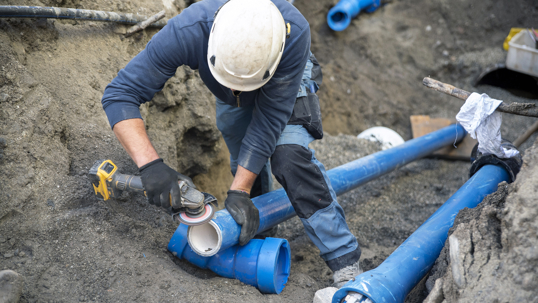
Maintenance alone has its limits, however. If the camera shows that a particular section of pipe is cracked, severely offset, or partially collapsed, a spot repair can be a better investment. That typically involves excavating down to that specific segment, removing the damaged material, and replacing it with modern pipe, often PVC, that is tightly sealed. Done correctly, this can remove a key entry point for roots and restore proper alignment and flow in that section.
In many older homes, especially where we see multiple failures along the line or widespread root intrusion, a full replacement or trenchless lining becomes the smarter long term choice. Full replacement involves excavating the path of the line and installing new pipe from the house to the connection point, often with cleanouts added for future access. Trenchless lining, when appropriate, involves creating a new pipe inside the old one, which can reduce surface disruption. Both approaches aim to create a continuous, sealed pathway that roots have a much harder time entering.
Newer materials, such as PVC and properly installed liners, have glued or cured joints that are more resistant to leaks than old clay or concrete with aging seals. That does not mean roots will never come near them, but without leaks to follow, roots are far less likely to penetrate. In practical terms, this usually means fewer problems, less risk of sudden collapse, and a much lower need for emergency service.
We understand that larger repairs are significant decisions. At Wolcott, we talk through the tradeoffs in plain terms: the ongoing cost and inconvenience of repeated cleanings, the risk of sudden failure, the impact on your yard or landscaping, and the benefits of a one-time, more durable fix. With flexible financing options available, many Portland homeowners choose to invest in a long term solution when they see the full picture, rather than keep paying for short term relief.
Balancing Healthy Trees & Healthy Drains
For many Portland homeowners, the idea of cutting down a mature tree is just as stressful as dealing with a sewer problem. The good news is that roots in your drain do not automatically mean a tree has to go. In many cases, the underlying issue is that an older, leaking pipe has become an easy source of water, and roots are simply doing what they are designed to do.
When we replace a failing line with sealed PVC or install an appropriate liner, we often see root-related problems drop significantly, even when the tree remains. Without the constant moisture leak from joints and cracks, there is no clear path for feeder roots to follow into the pipe. That is why addressing the pipe’s condition is usually a more effective and sustainable solution than trying to fight the tree alone.
There are also ways to plan around roots and trees during repairs. Careful locating helps us route new lines or plan excavation in ways that avoid major root systems when possible. In some cases, installing root barriers or adjusting landscape plantings near the line can reduce future pressure on the system, especially once a structurally sound pipe is in place.
As a family-owned, community-rooted company, we understand how attached people are to the tree canopy and gardens that make Portland neighborhoods unique. When we design repair plans, we treat your property as if it were our own, looking for solutions that protect both your drains and your landscape as much as conditions allow. If an arborist or landscaper needs to be involved for certain decisions, we will say that clearly and coordinate as needed, rather than trying to handle what is outside our role.
When to Call a Plumber About Tree Roots in Your Drains
Some minor drain issues can be handled with simple measures, but certain patterns almost always call for a closer look. If you are dealing with repeated main line clogs, sewage backing up into basement floor drains, multiple fixtures slowing down at once, or you have already been told there are roots in your line, it is time to bring in a plumber who can perform a proper inspection. Waiting until the next big storm or family gathering to see if it happens again usually means facing a worse mess and fewer options.
Scheduling a camera inspection before the situation becomes an emergency gives you more control. You can see what is happening in your pipes, compare options like maintenance, spot repair, or full replacement, and plan work on a timeline and budget that fit your life. If you are already in an active backup, we can provide emergency service to clear the line and then follow up with diagnostics once the immediate crisis is under control.
When you call Wolcott, you can expect prompt scheduling, upfront pricing, and clear communication at every step. Our technicians arrive prepared to protect your home, explain what they find in straightforward terms, and leave the work area clean and safe. For many Portland families and businesses, we have been the go-to plumbing, HVAC, and electrical partner for generations, and we take that trust seriously on every job.
Protect Your Home from Tree Root Drain Damage
Tree roots and older drains do not have to be a mystery or a constant source of anxiety. Once you understand how roots find their way into aging pipes, what those intrusions look like inside the line, and how different repair strategies perform over time, you can make decisions that protect your home and yard for years to come. Addressing the problem on your terms, with clear information and a solid plan, is far better than waiting for the next surprise backup.
If you are seeing the warning signs of root intrusion in your Portland home, or you want to know what shape your drain and sewer lines are in before trouble starts, we are ready to respond. A sewer camera inspection and honest assessment from our team can show you what is happening underground and give you realistic options, from maintenance programs to long term repairs, with no hidden costs.
Call (971) 253-7883 today to schedule an inspection with Wolcott.